
Gridbots 101 - Turning Digital assets like Stocks and Crypto into Passive Cashflow

Today, I’m going to show you one of the tools I use to make my portfolio work a little harder:
Grid Bots.
And no, this isn’t some magical AI that prints money while you sleep.
It’s much simpler than that.
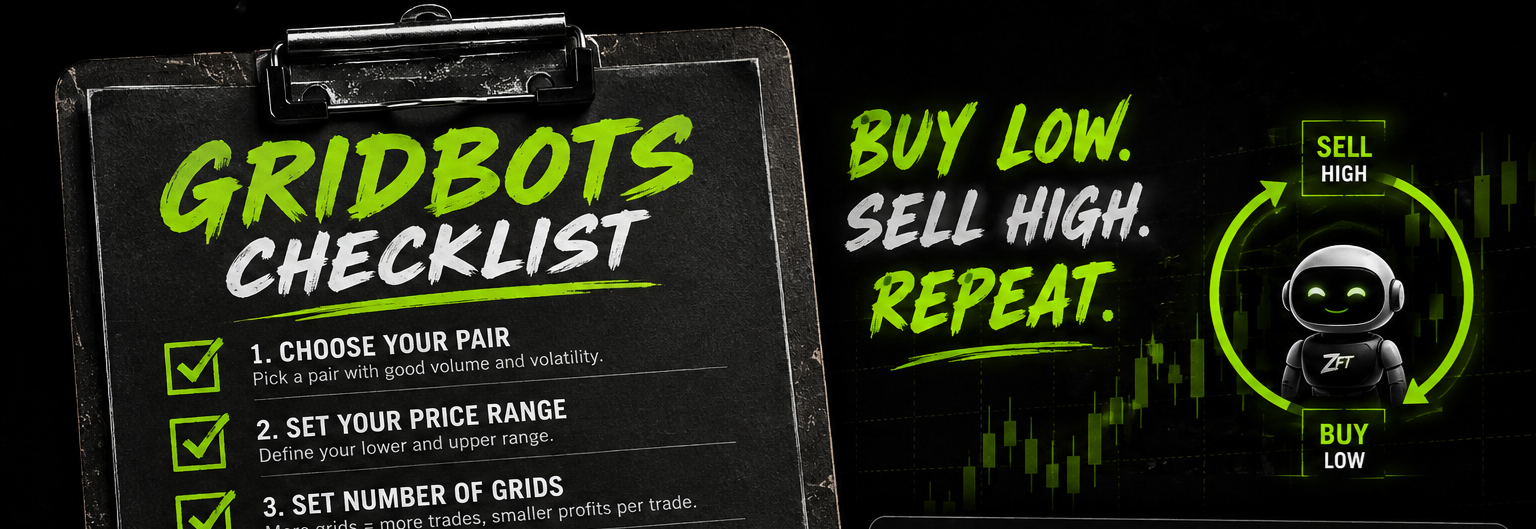
A Grid Bot basically does three things:
Buy lower.
Sell higher.
Repeat.
You choose a price range.
The bot divides that range into smaller levels called grids.
Then as price moves up and down, it automatically buys and sells between those levels.
Think of it like placing a fishing net across a market.
Instead of trying to catch one giant move, you’re trying to collect lots of smaller ones.
WHY I USE GRID BOTS
Markets rarely go:
Up.
Up.
Down.
Up.
Up.
Down.
Usually it’s more like:
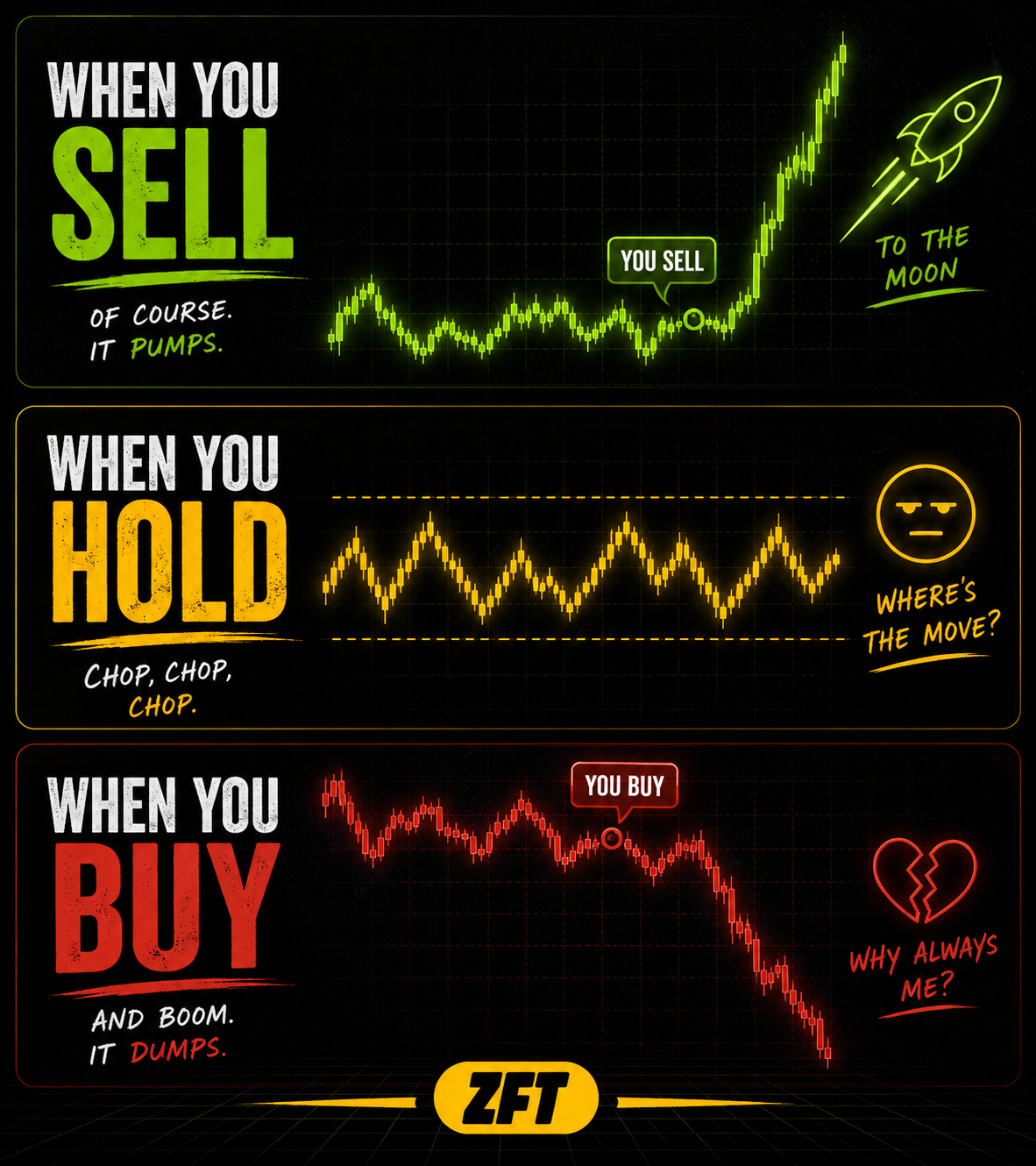
Pump.
Correction.
Bounce.
Sideways.
Fake breakout.
Dump.
Then it pumps five minutes after you finally sell.
😂
Grid Bots are designed to take advantage of that movement.
So instead of getting annoyed that an asset is going sideways, I’m asking:
Can I get paid while it does?
That’s the whole idea.
Grid Bots don’t remove volatility.
They try to monetize it.
WHO IS THIS FOR?
I’m explaining this mainly through my own perspective as an:
Investor and trend follower.
I generally prefer:
Wider ranges.
Longer time horizons.
Assets I actually want to own.
And setups that can survive ugly markets.
A short-term trader can use Grid Bots too.
You can tighten the range, increase the number of grids, and make the whole thing more aggressive.
Just remember:
Higher potential reward usually comes with a higher chance of getting slapped by the market.
SPOT GRID VS FUTURES GRID
SPOT GRID
This is the simpler version.
You’re buying and selling the actual asset.
BTC/USDT, for example.
There’s no leverage involved.
If you’re completely new to Grid Bots, I’d learn this first.
Understand the machine before installing the turbo.
FUTURES GRID
Personally, I also use Futures Grid Bots.
Why?
Capital efficiency.
Because leverage allows me to control more exposure using less capital upfront.
I personally use around 5X in some setups, especially those designed for long term HODLs, and for short-term? I go up to 50x.
For beginners who already understand futures risk, something around 2X to 2.5X is more reasonable than immediately discovering what 20X liquidation feels like.
The important question isn’t:
“How much leverage am I using?”
It’s:
“Where can I get liquidated?”
HOW I THINK ABOUT FUTURES GRID RISK
When I build a Futures Grid, I don’t start with:
“How much can I make?”
I start with:
“How bad can things get? And how do I not get liquidated when that scenario happens?”
For my lower range, I think multi-cycle wide.
What price could this asset realistically hit in an extreme bear market?
What price would make me say:
"Okay, something seriously broke."
That’s the kind of level I’m thinking about.
Then for the upper range:
Where could this asset realistically go if the market enters full euphoria mode?
Basically:
Worst-case fear at the bottom.
Maximum stupidity at the top.
That gives me my broader range.
WATCH YOUR LIQUIDATION PRICE
With Futures Grid, always check your:
Estimated Liquidation Price.
That’s your danger line.
If my worst-case scenario is here...
I want my liquidation price way below it.
Not sitting right beside it like:
"Surprise! Margin call."
If the liquidation price is too close, I can:
Add more margin.
That additional margin becomes my capital buffer.
HOW MANY GRIDS?
Think of your grids like your dividend payout frequency.
More grids:
More frequent trades, smaller profit per grid.
Fewer grids:
Less frequent trades, bigger profit per grid.
It’s almost like choosing between:
"Pay me a little more often."
or
"I'm okay waiting, but Pay me more."
Neither is automatically better.
It depends on the asset, your range, and your strategy.
THIS GETS INTERESTING WITH STOCKS AND OTHER ASSETS
One reason I like where Grid Bots are going is that this idea isn’t limited to crypto anymore.
You can now get exposure to traditional market assets through platforms like OKX and other exchanges, as well.
And this creates an interesting idea for investors.
Imagine a stock or asset that normally gives you little or no cash flow.
You buy it.
You hold it.
You wait.
With a Grid Bot, you’re potentially creating another source of return from the asset’s movement itself:
Grid profits.
To be clear, that’s not an actual dividend.
But psychologically, I like thinking about it as creating a cash-flow layer around an asset that otherwise just sits there waiting for capital appreciation.
WHY I USE OKX
There are plenty of exchanges with Grid Bots.
I personally like OKX for a few reasons.
1. CLEAN INTERFACE
It’s fast.
It’s easy to understand.
And when I’m running several bots, I don’t feel like I’m operating a nuclear submarine.
2. SIMPLE EARN
On eligible Spot and Future Grid setups, idle USDT can potentially earn through Simple Earn while it isn’t actively being used by the grid. Currently they give around 3% APY on your IDLE USDT.
So instead of my capital sitting there, at least, it has another job.
3. TRADING REBATES
Grid Bots can make a lot of trades.
A lot of trades means a lot of fees.
If your account has an affiliate rebate, part of those eligible fees can come back to you.
So I look at the whole thing in layers:
Underlying asset performance.
Grid profits.
Potential Earn income.
Trading rebates.
Personally, I keep my rebates separate.
I don’t recycle them into the market.
I treat them as another source of income.
Small amounts?
Sure.
But if your bots are trading constantly?
Those small numbers have a funny habit of becoming bigger numbers.
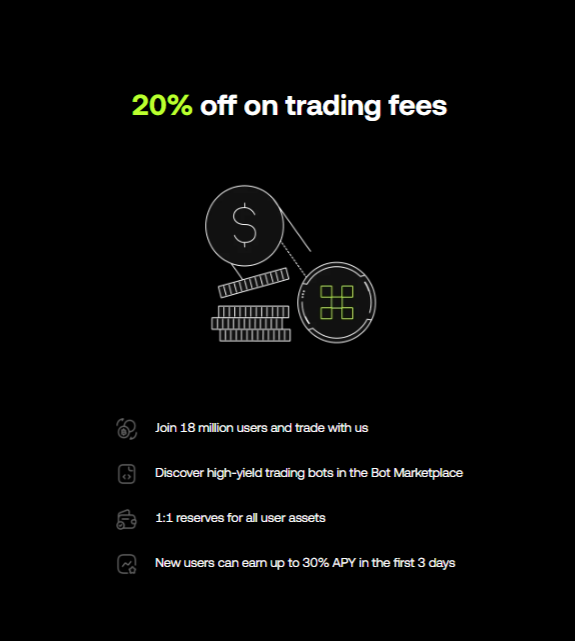
Don't have an OKX account yet? Get 20% Off your Trades by using our Link and Code:
https://www.okx.com/join/OFF2O
NOW THE BAD NEWS
Grid Bots are not free money.
The word “bot” sometimes makes people think:
"Ah. Passive income."
Relax.
You just hired a robot.
If you give the robot terrible instructions...
it will execute those terrible instructions perfectly.
Automation does not fix bad analysis.
It simply automates it.
RISK #1: PRICE LEAVES YOUR RANGE
If your bot is set between:
$90,000 and $110,000
and Bitcoin decides:
"Actually, $70,000 sounds nice."
your strategy is now outside its intended range.
With Spot Grid, you could end up holding the asset at an unrealized loss.
With Futures Grid, liquidation becomes another problem entirely.
This is why your range matters.
RISK #2: YOU CAN UNDERPERFORM HODLING
Let’s say Bitcoin goes straight from:
$100K
to $150K
to $200K.
Your Grid Bot may have been selling portions all the way up.
You made money.
Congratulations.
But simply holding may have made more.
That’s the trade-off.
Grid Bots are designed to harvest movement inside a range.
They’re not necessarily the best strategy for a market that simply teleports upward.
RISK #3: NO EASY PARTIAL EXIT
One limitation I don’t like is taking partial profit from the actual bot position.
So I work around it.
Instead of creating:
One giant bot
I may create:
Bot A
Bot B
Bot C
Same general idea.
Then when target one gets hit...
close Bot A.
Target two...
close Bot B.
Then let Bot C run.
Congratulations.
We invented partial take profit using organization.
RISK #4: FEES
More grids usually means more trades.
More trades means more fees.
So don’t stare at the gross grid profit and forget that somebody is collecting transaction fees along the way.
This is also why trading rebates matter to me.
RISK #5: LIQUIDATION
Spot can go badly against you and you may still own the underlying asset.
Futures is different.
You can get liquidated.
That’s why:
5X is not automatically safe because Zee uses 5X.
What matters is the entire structure:
Range.
Position size.
Leverage.
Margin.
Liquidation price.
And your worst-case scenario.
A well-designed 2X setup can be far better than a stupid 10X setup.
MY SIMPLE GRID BOT CHECKLIST
Before I deploy one, I ask:
1. Do I actually like the asset?
If I get stuck holding it, am I okay with that?
2. Is my range wide enough?
Especially for long-term setups.
3. Why am I using leverage?
For me, the answer should be capital efficiency.
Not excitement.
4. Where is my liquidation price?
Can the setup survive my worst-case scenario?
5. Do I need more margin?
Give the position room to breathe.
6. How many grids do I want?
Frequent small profits?
Or fewer, larger ones?
7. How am I taking profits?
One bot?
Or several bots that I can close progressively?
Decide this before the market goes euphoric.
Because when everything is green...
everybody temporarily becomes a financial genius.
THE MAIN POINT
This is why I want investors and trend followers to understand Grid Bots.
I’m not using them because I want to sit in front of charts all day.
Quite the opposite.
I’m asking:
How can I make assets I already want to own work harder for me?
Automate some buying.
Automate some selling.
Monetize sideways movement.
Potentially earn on idle capital.
Get rebates where available.
And do it inside a structure where I already know:
What happens if I’m wrong?
That’s the part people forget.
Making money when you’re right is easy.
Good risk management is making sure you’re still around after the market proves you wrong.